

Hawk Performance
Hawk Performance HB109D.710 Hawk Performance Alcon/AP Racing ER-1 Motorsport Brake Pads
Hawk Performance HB109D.710 Hawk Performance Alcon/AP Racing ER-1 Motorsport Brake Pads
Couldn't load pickup availability
Hawk Performance HB109D.710 ER-1 Endurance Racing Compound
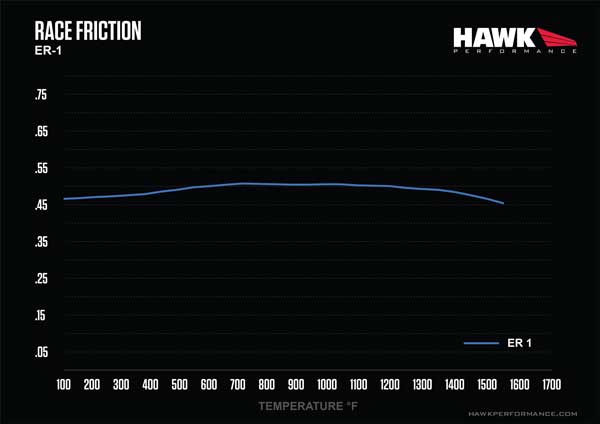
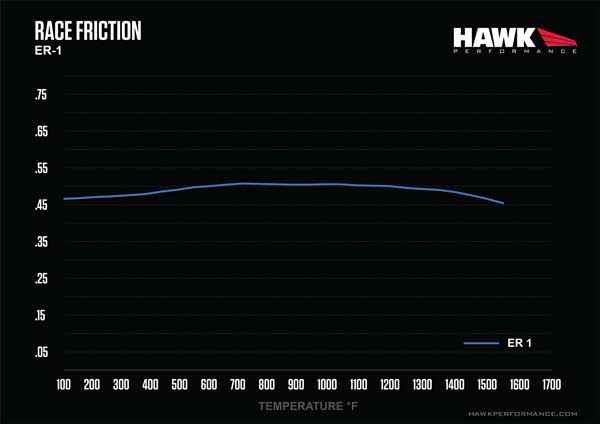
ER-1 has been developed by Hawk Performance for the endurance racing market with a simple goal; offer a higher coefficient of friction than competing endurance pads while maintaining matched or improved lifespan. Years of testing across America’s most prestigious races has resulted in a well-rounded compound that offers ideal modulation and pedal communication, with ground breaking friction stability across a thermal range as high as 1,600 Deg F. This consistency of performance, hour after hour, makes it ideal for not only endurance racing, but HPDE, track days, time trials and even sprint racing.
Hawk Performance ER-1 Race Compound Characteristics:
- Superior Rotor and Pad Wear.
- Consistent Medium to High Friction.
- Ideal for light-to-medium weight vehicles in HPDE, Track Day events, Time Trials, or Endurance Racing.
- Higher coefficient of friction than competing endurance pads, with matched or improved lifespan.
- Medium to High Torque
- 400-1600 Deg F Operating Temperature Range
- 700-1100 Deg F Optimal Temperature Range
Hawk Race Compound Chart
 WARNING
This product can expose you to Silica, crystalline (airborne particles of respirable size), which is known to the State of California to cause cancer. For more information go to www.P65Warnings.ca.gov
Hawk Brake Pad Installation Procedure
- Install Brake pads properly. Be sure pads are securely positioned in the caliper.
- Flush system with fresh brake fluid.
- Check all hydraulic parts for excess wear and tear.
- Check disc for proper thickness, parallelism, and lateral run-out.
- Check disc for scoring or grooves over .012"" depth. If either applies, resurfacing or replacement is required.
- If disc does not need resurfacing then contamination from the previous brake pads must be removed. Sand discs with Garnet sandpaper using moderate pressure. Use soap and water to clean off disc surface after sanding and machining. Discs should be free and clear of oil, grease, and brake fluid
- Inspect calipers for freedom of movement. Lubricate where necessary
Hawk Brake Pad Bedding Procedure - Motorsports Pads
- After reaching medium speed engage brake pedal to slow car without coming to a complete stop. Release pedal quickly and do not drag brakes. Repeat four or five times.
- At higher speeds engage brake pedal to slow car without coming to a complete stop. Release pedal quickly and do not drag brakes. Repeat five times.
- At or near race speed engage brake pedal to slow car without coming to a complete stop. Release pedal quickly and do not drag brakes. Repeat three times. Allow a few seconds between brake engagements while car is in motion.
- Do not hold brake pedal. Park car for approximately 20 minutes or until brake rotors are completely cool to the touch.
- If during the above steps the brake pedal becomes soft or brake fade is noticed, park the car immediately for approximately 20 minutes. Do not hold brake pedal.
Important Reminders when Burnishing or Bedding Brake Pads
- Do not attempt to use badly worn or damaged rotors with new brake pads.
- Do not drag brakes while car is moving during break-in procedure.
- Do not engage pedal while car is stopped at any time following the break-in procedure.
- Upon completing the procedure, allow the brake system to completely cool before racing.
- Applying the pedal a few times before the start of the race will allow the brake pads to heat up before attempting to reach race speeds.
- Clean a used rotor surface with fine sand paper or steel wool, rinse with water, dry and install before bedding new pads.
- Some forms of racing don’t allow time for the proper break-in procedure to be performed. However, it is still very important to attempt to perform at least the core of the procedure: Build up heat slowly and allow the system to completely cool down before racing if possible.